Cardiology tools for the bedside.
Fast, reliable hemodynamic workflows built for cardiologists, fellows, and intensivists. Transparent math. Minimal taps. Evidence-aligned results.
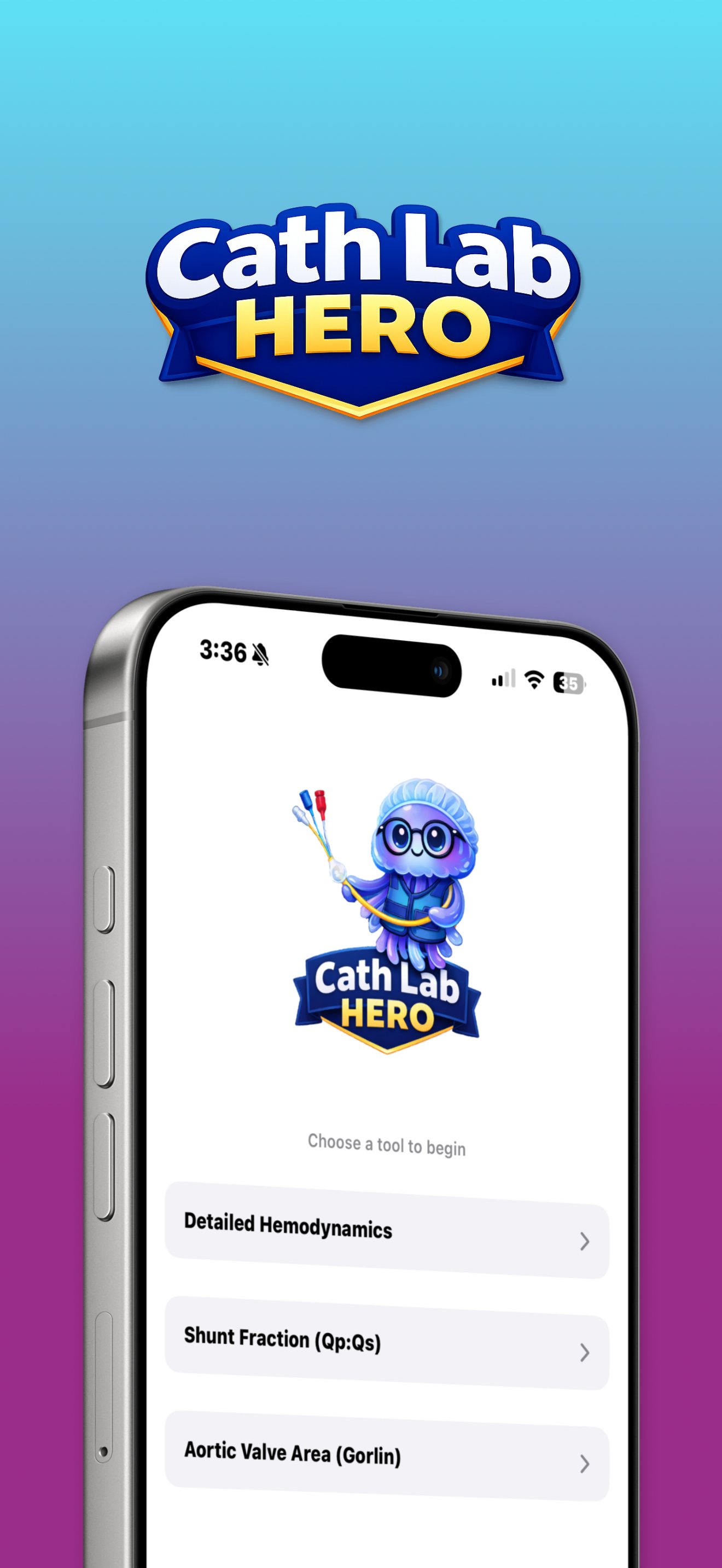
Built for real clinical work
Every design decision prioritizes speed, clarity, and trust at the point of care.
Bedside speed
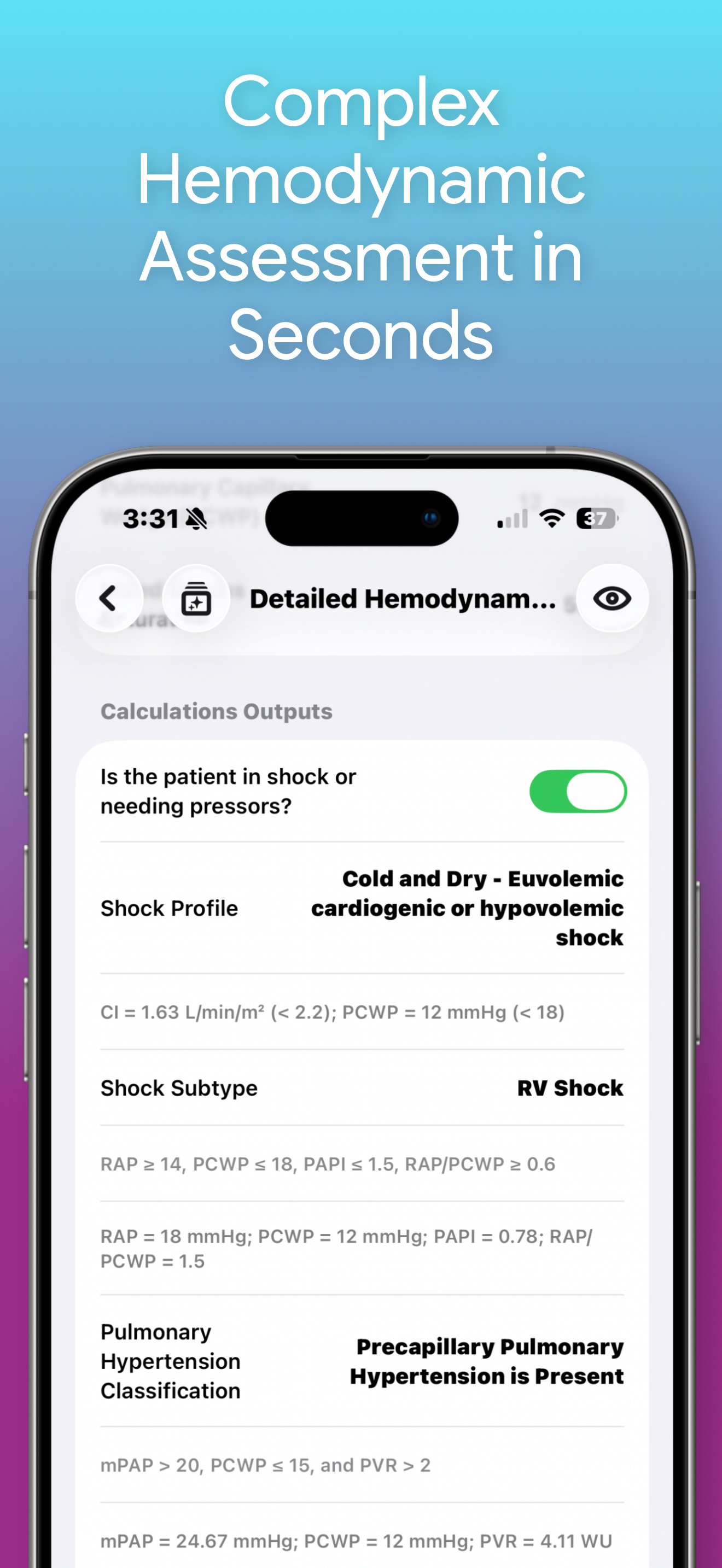
Complex hemodynamic assessments in seconds. No fumbling — high signal-to-noise, readable with gloves.
Transparent math
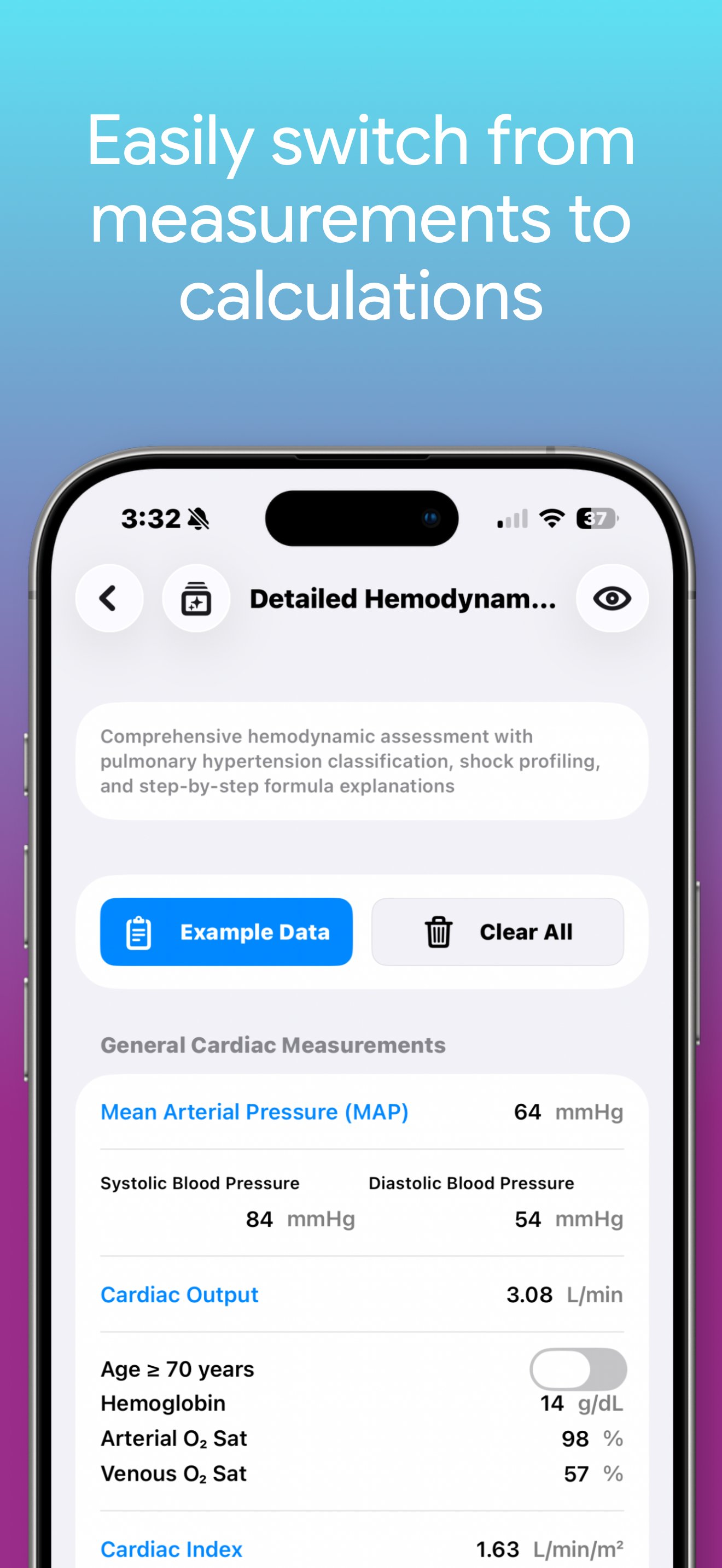
Every formula shown step-by-step. Inputs that map to clinical reality; results you can defend and document.
PDF reports
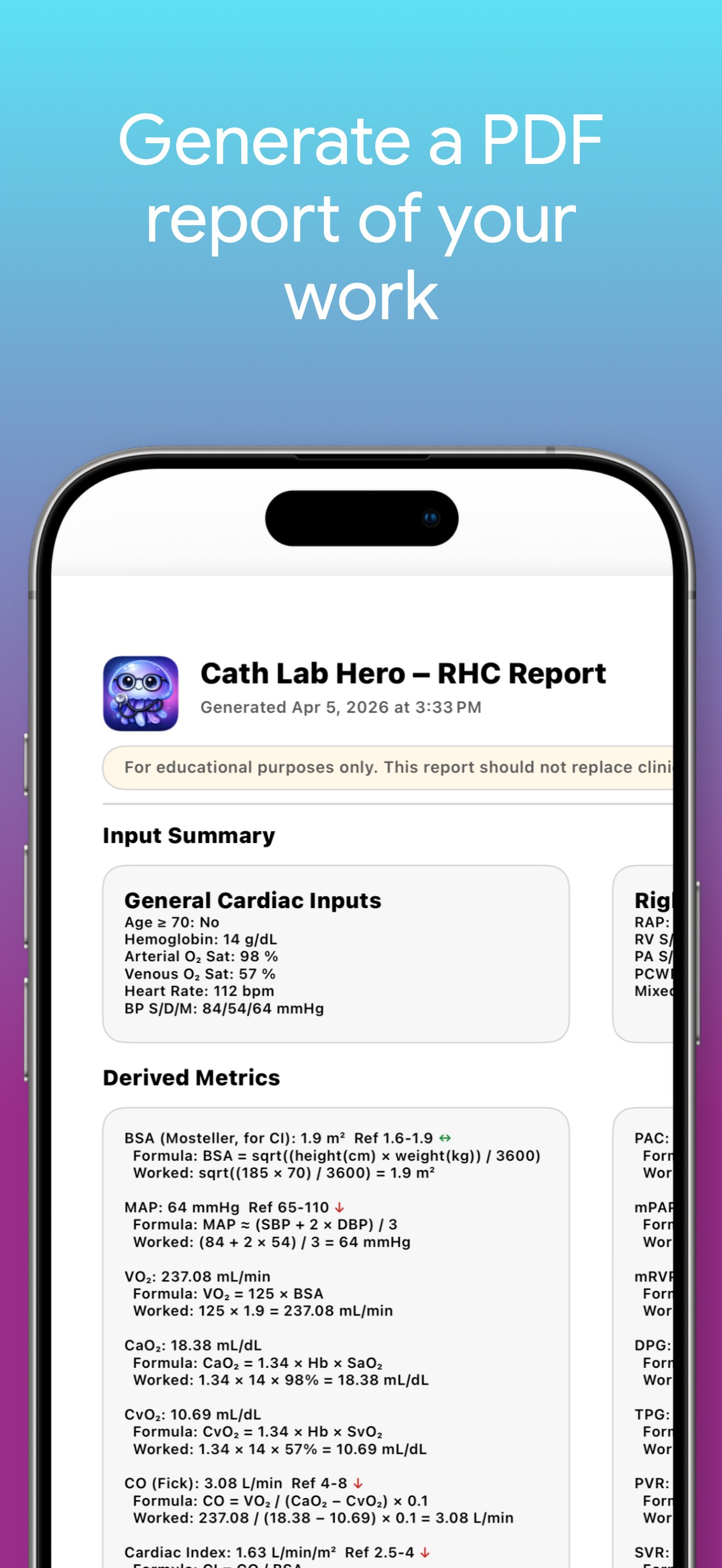
Generate a complete RHC report with all derived metrics, formulas, and reference ranges — shareable in one tap.
AI-ready prompts
Copy your hemodynamic data as a structured prompt. Paste into any medical AI for instant clinical interpretation.
Guideline-based
PH classification per the ESR 7th World Symposium. Shock profiling per JACC practical guidance.
Privacy-first
Zero patient data stored or transmitted. Lean data collection, principled defaults, designed for compliance.
Everything you need in the cath lab
From raw measurements to clinical insight — all in one place.
Complex assessment,
simplified in seconds
Enter your right heart cath numbers and instantly get shock profiling, pulmonary hypertension classification, cardiac output, PVR, SVR, PAPI, and 14+ derived parameters — all with step-by-step formula explanations.
Generate & share your work
One tap exports a complete RHC report with all inputs, derived metrics, formulas worked out, and reference ranges — ready for the chart or curbside.
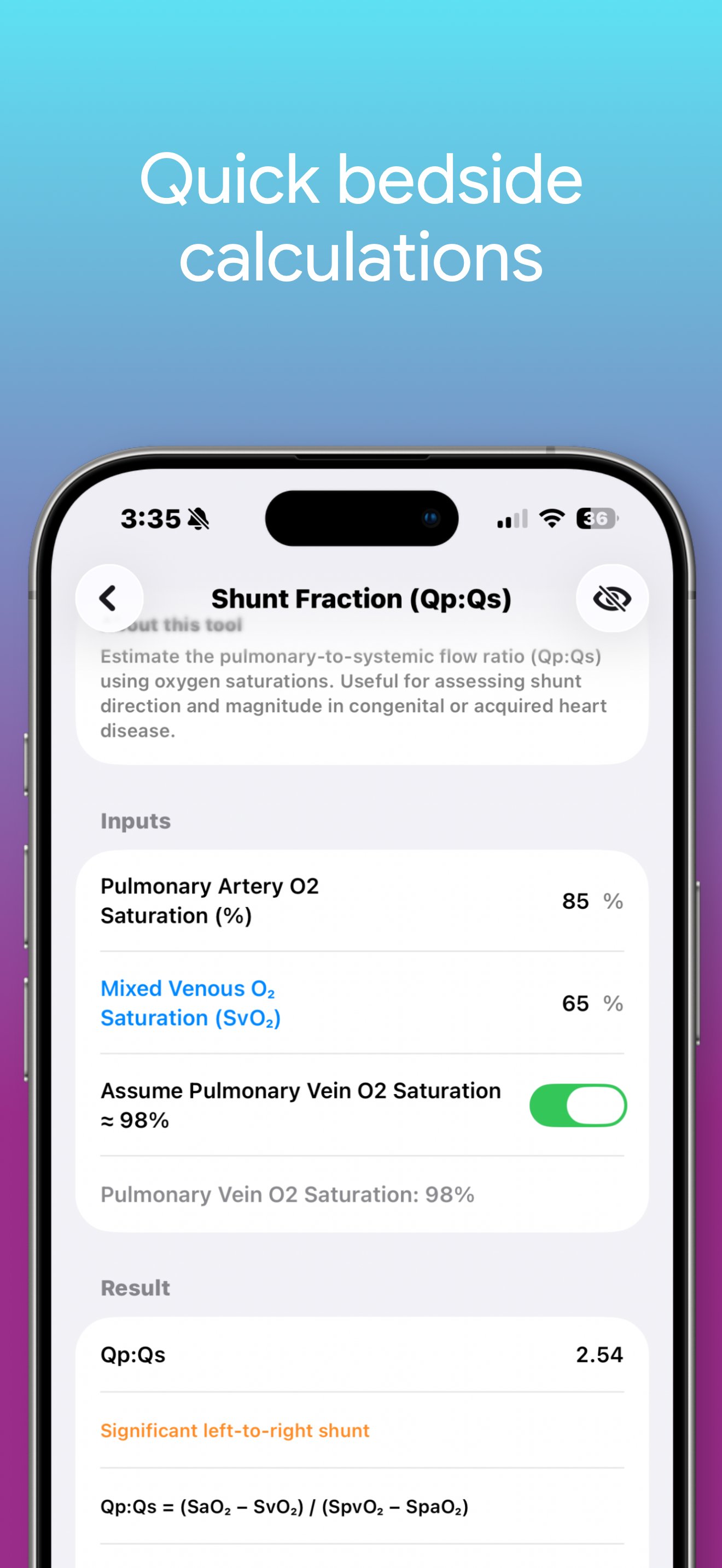
Quick bedside calculations
Qp:Qs shunt fraction with instant left-to-right interpretation. Aortic valve area via the Gorlin formula for invasive AS assessment.
The OJCmed suite
A growing collection of clinician-first tools for cardiology and critical care.
Cath Lab Hero
LiveRight-heart cath workflows, hemodynamics, shock profiling, and PH classification. Built for cardiologists, fellows, and intensivists.
Water Pill Hero
Coming soonDiuresis tracking made simple: inputs, outputs, weights, and daily trends for fluid management in heart failure.
More tools
RoadmapA growing suite of clinician-first tools — built for speed, clarity, and trust across cardiology and critical care.
What we care about
Accuracy, speed, and usability — without getting in the way of clinical thinking. Every OJCmed tool is built on the same foundation.
Download Cath Lab Hero →
Clarity over clutter
Readable with gloves, minimal taps, high signal-to-noise. No feature bloat.
Trustworthy outputs
Inputs that map to clinical reality; results with formulas you can defend and document.
Practical by default
Tools that match how clinicians actually work — fast, focused, and dependable.
Privacy-minded
Lean data collection, principled defaults. We don't need your patients' data to help you.